
In elevator safety systems, buffers are crucial safety components. As the last line of defense in the shaft pit, the reliability of the buffer directly affects the safety boundary of the elevator under extreme operating conditions.
In recent years, polyurethane buffers have been widely used in the domestic and international elevator markets due to their advantages such as shallow pits, small size, maintenance-free operation, and high cost-effectiveness. However, at the same time, problems such as powdering, cracking, and performance degradation that have occurred in some products during service have also raised concerns and discussions within the industry regarding their long-term stable service capabilities. How can we objectively and scientifically evaluate whether polyurethane buffers can truly support their promised service life? The answer is gradually shifting from experience-based judgments to standards and data.
I.The shift in perception from “can pass the test” to “can serve for a long time”
From a material properties perspective, polyurethane is a polymer material, and its service performance is inevitably affected by time and environmental factors. Unlike metal components, its performance degradation is not linear, but often manifests itself after long-term exposure to damp heat.
Elevator shafts are generally characterized by high humidity and poor ventilation, which places higher demands on the hydrolysis resistance and aging resistance of polyurethane materials. Practice has shown that some buffers are not “initially inadequate in performance,” but rather their cushioning capacity is ultimately affected by the gradual deterioration of the material structure under long-term environmental conditions.
This also reminds the industry that it must face up to an issue: it needs to develop performance indicators that conform to the material properties to ensure that polyurethane shock absorbers can be used stably for a long time.
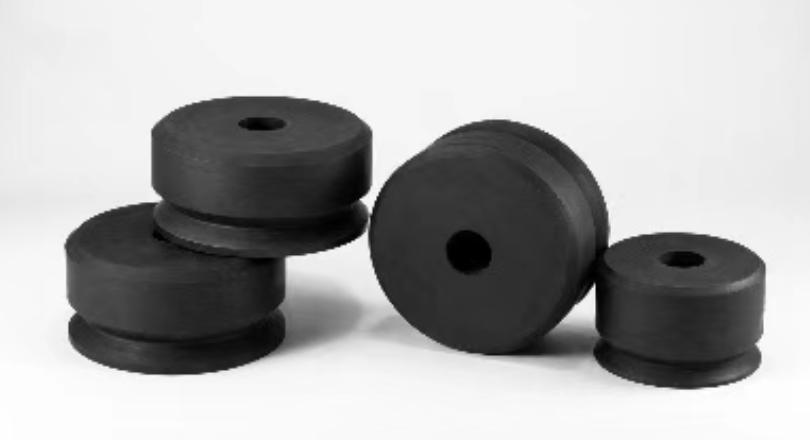
II.Practical Application Background of Standard Upgrade
China has always maintained a high-pressure stance on elevator safety supervision. With the implementation of TSG T7007—2022 “Elevator Type Test Rules”, polyurethane buffers are explicitly required to have a service life of no less than 10 years.
• A 10-year service life is mandatory.
• Lifespan verification methods are relatively limited.
Against this backdrop, the China Elevator Association released the group standard 《T/CEA 0055-2024 for Polyurethane Buffers for Elevators》 in 2024, which systematically put forward clearer and more operable requirements for the long-term stable service capability of polyurethane buffers in terms of materials, structure, performance, test methods and scrapping conditions.
III.”720-Hour Double 85″ Aging Test: A Key Approach to Solving Aging Problems
One of the most attention-grabbing technical requirements in this group standard is the significant enhancement of the temperature and humidity aging test.
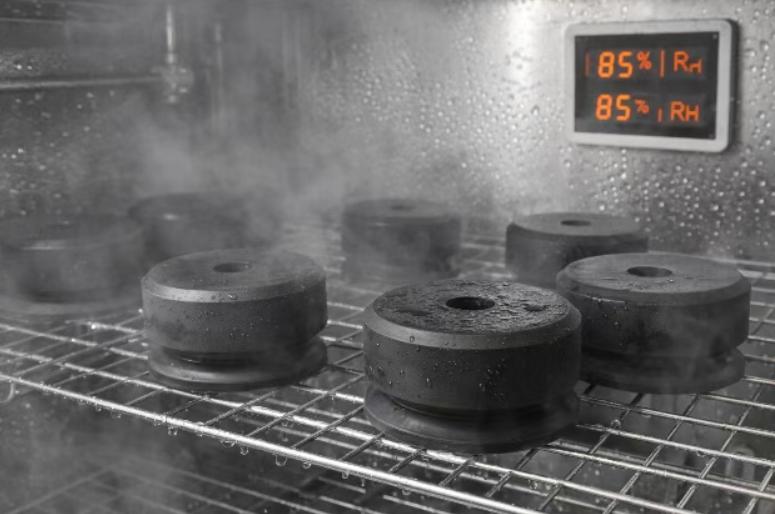
The standard clearly stipulates that the complete buffer should be tested under the conditions of 85℃ and 85% relative humidity:
• 96-hour temperature and humidity aging test, as basic weather resistance verification;
• 720-hour temperature and humidity aging test, as long-term service capability verification.
More importantly, the standard does not limit aging tests to “visual inspection,” but explicitly requires:
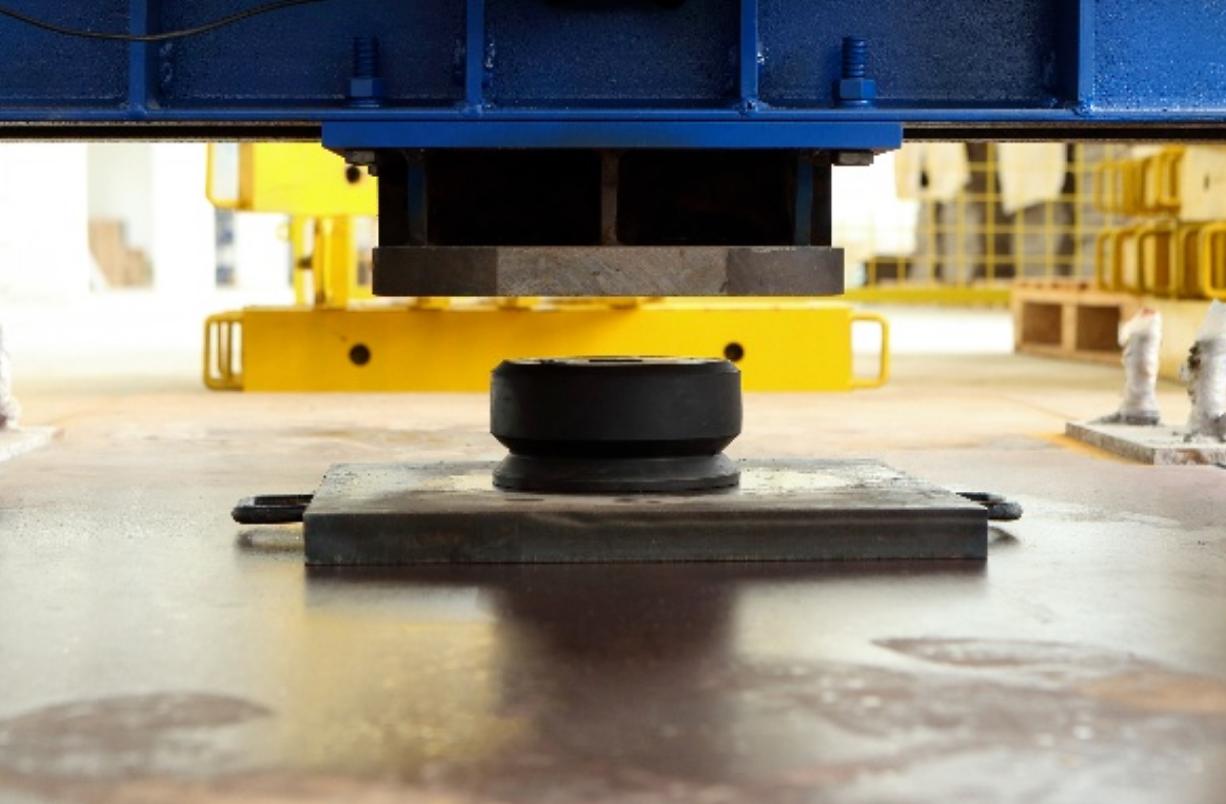
Samples that pass the 720-hour aging test still need to undergo an impact test with the maximum permissible mass, and the relevant deceleration indicators must meet safety requirements.
Long-term aging resistance test → Performance retention after aging → Actual safety assurance.
IV.Real-world service data: Testing products over time
In early 2025, the Elevator Testing Center of Shanghai Jiao Tong University, together with relevant companies in the industry, conducted a special survey on elevator projects in several regions of my country with significant climate differences. They replaced polyurethane buffers that had been in service for about 10 years on-site and carried out systematic testing on the replacement samples.
Test results show that, under the premise of a reasonable material system, controlled production process, and rigorous aging resistance verification, some polyurethane buffers, even after nearly 10 years of actual service, still maintain their mechanical and cushioning performance within a controllable range and can meet the corresponding safety requirements (ETC Inspection Report 2025-W435).
Whether a polyurethane shock absorber can serve for a long time depends on whether the material itself can withstand long-term aging tests.
V.Conclusion
Safety is never a matter of “good enough,” but rather a systematic project requiring continuous verification and improvement.
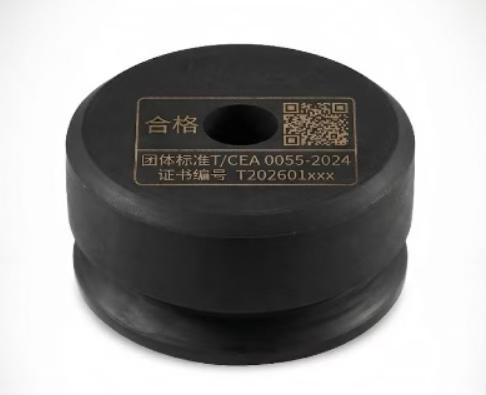
With the introduction of the higher-performance group standard《T/CEA 0055-2024 for Polyurethane Buffers for Elevators》, the industry is now equipped to systematically evaluate the long-term stable service capability of polyurethane buffers based on standards and data. Driven by regulatory guidance, corporate self-discipline, and technological advancements, polyurethane buffers are expected to play a more stable and reliable role in ensuring the safety of elevators throughout their entire lifecycle.
Post time: Mar-17-2026